
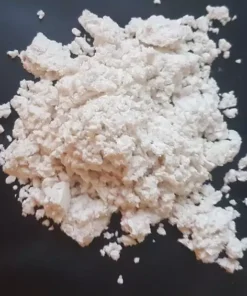
Buy 3-Hydroxyphencyclidine online
Price range: $150.00 through $2,500.00
Buy 3-Hydroxyphencyclidine (3-HO-PCP) online and learn about this potent arylcyclohexylamine dissociative. Explore its pharmacology, reported effects, potential health risks, and legal status in this educational research overview.
Buy 3-Hydroxyphencyclidine online
The compound 3-Hydroxyphencyclidine (3-HO-PCP) represents a dissociative substance which belongs to the arylcyclohexylamine chemical class. The substance exists as a chemical derivative of phencyclidine (PCP) and other dissociative anesthetics, which makes it a subject of scientific inquiry because of its strong effects on central nervous system receptors. Researchers and drug monitoring organizations classify 3-HO-PCP as part of the complete group of new psychoactive substances which have developed during the last ten years.
Chemical background and classification of 3-Hydroxyphencyclidine
3‑HO‑PCP is a derivative of phencyclidine in which a hydroxyl (–OH) group is attached to the aromatic ring at the 3‑position. The compound’s receptor binding properties and its pharmacological effects show different results from the original compound because of this structural change. Arylcyclohexylamines—including PCP, ketamine analogues, and related compounds—are known for producing dissociative effects, which involve alterations in perception, sensory processing, and the sense of self or body awareness.
Pharmacology of 3-Hydroxyphencyclidine
Although comprehensive clinical studies on 3‑HO‑PCP remain limited, available pharmacological research and structural comparisons suggest that it primarily acts as an NMDA receptor antagonist. The NMDA receptor is part of the glutamatergic system and plays an important role in learning, memory, and neural signaling.
By blocking NMDA receptors, compounds in this class can disrupt normal excitatory neurotransmission, leading to dissociative and anesthetic effects.
In addition to NMDA receptor antagonism, some studies suggest that 3‑HO‑PCP may also interact with opioid receptors, particularly the mu‑opioid receptor, which may influence its analgesic and sedative properties. However, the extent and clinical significance of this interaction remain under investigation.
Reported effects
Observational and anecdotal reports indicate that 3‑HO‑PCP may produce a range of dissociative and psychoactive effects. These effects may include:
Altered perception of sound, vision, and time
Dissociation from the body or surroundings
Sedation or physical relaxation
Mood changes or euphoria
Analgesia (reduced perception of pain)
Cognitive impairment or confusion
The intensity and duration of these effects can vary widely depending on dosage, individual physiology, and environmental factors.
Potential health risks
Like many dissociative research chemicals, 3‑HO‑PCP has not been thoroughly studied in controlled clinical environments. As a result, its safety profile is not well established.
Potential risks associated with dissociative compounds may include:
Impaired coordination and judgment
Memory disruption and confusion
Psychological distress or hallucinations
Elevated heart rate or blood pressure
Accidental injury due to dissociation or reduced awareness
High doses or repeated exposure may increase the risk of adverse effects. Additionally, combining dissociatives with other depressants or psychoactive substances may significantly increase health risks.
Potential health risks
Like many dissociative research chemicals, 3‑HO‑PCP has not been thoroughly studied in controlled clinical environments. As a result, its safety profile is not well established.
Potential risks associated with dissociative compounds may include:
Impaired coordination and judgment
Memory disruption and confusion
Psychological distress or hallucinations
Elevated heart rate or blood pressure
Accidental injury due to dissociation or reduced awareness
High doses or repeated exposure may increase the risk of adverse effects. Additionally, combining dissociatives with other depressants or psychoactive substances may significantly increase health risks.
Research and forensic relevance
Compounds such as 3‑HO‑PCP are frequently studied in forensic toxicology and drug‑monitoring programs that track emerging psychoactive substances. Analytical methods such as gas chromatography–mass spectrometry (GC‑MS) and liquid chromatography–mass spectrometry (LC‑MS) are commonly used to detect and identify these compounds in seized samples and biological specimens.
Continued research is necessary to better understand the pharmacological properties, toxicity, metabolism, and potential medical implications of this compound and related arylcyclohexylamines.
| Weight | 10 Grams, 100 Grams, 1000 Grams, 25 Grams, 250 Grams, 50 Grams, 500 Grams |
|---|
Be the first to review “Buy 3-Hydroxyphencyclidine online”
Related products

Research Chemicals

Research Chemicals

Research Chemicals
Research Chemicals

Research Chemicals
Buy AMT Online in usa – High-Purity Alpha-Methyltryptamine for Research
Research Chemicals

Research Chemicals
Research Chemicals
Reviews
There are no reviews yet.